

The Impact of FAO’s Wheat Programme on Afghanistan's Food Security
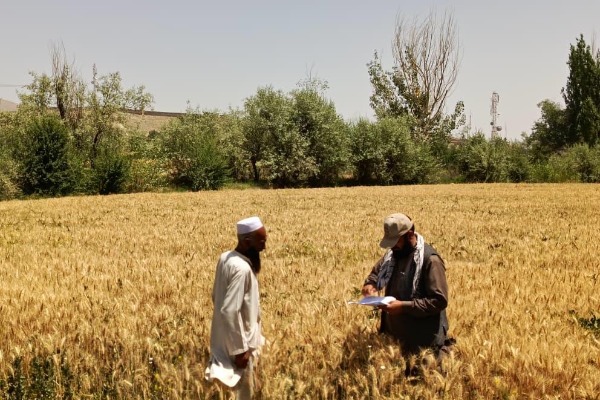
Abdul Manan, a 50-year-old farmer from Aman Khil village in the Sayed Abad district of Wardak province, reflects on his remarkable agricultural journey.
With a family of seven—three daughters and four sons, all of whom are students—Abdul Manan has dedicated his life to farming as his sole source of income.
For years, he relied on traditional farming methods and local seeds, which resulted in low yields that barely sustained his family.
In the past, Abdul Manan struggled to provide enough food for his family throughout the year. With inadequate harvests, he often found himself purchasing wheat from the local market to meet basic needs. The burden of financial strain weighed heavily on him, as he longed for a better life for his children.A turning point came when the Food and Agriculture Organization (FAO) initiated a beneficiary selection program in his village, offering a wheat package that included improved seeds and essential fertilizers—UREA and DAP.
To his delight, Abdul was selected as a beneficiary, marking the beginning of a new chapter in his farming journey. After receiving the improved seeds and fertilizers from the distribution point, Abdul Manan eagerly planted the wheat in his fields.
This time, he was not alone; technical trainers from the STARS organization visited Aman Khil to provide hands-on training they taught farmers like Abdul Manan vital agricultural practices, covering topics such as proper storage of certified wheat seeds and fertilizers, optimal usage for rainfed and irrigated wheat cultivation, handling treated seeds and safety measures, appropriate fertilizer usage including dosage, timing, and method, integrated pest management using natural techniques, identification of common diseases and infestations, sustainable and climate-resilient wheat crop cultivation, effective weed management strategies, and seed storage practices for the next cultivation season With the knowledge gained from this training and the use of improved agricultural inputs, Abdul Manan yield soared. Previously, he harvested only 1.3 tons from his two jeribs (0.4 ha) of land. This year, with new seeds and techniques, his harvest reached an astounding 3 tons.
This increase not only ensured that his family had enough food for the entire year but also allowed him to sell surplus wheat to neighboring farmers, creating an additional income stream.
He attributes his achievements to three essential pillars: continuous learning, the use of improved wheat seeds, and relentless hard work. These elements have transformed his farming practices, enhanced not only his family’s food security but also contributed to the broader agricultural economy in his village.Abdul Manan's journey exemplifies how targeted interventions, such as the FAO's support, can lead to significant improvements in the lives of farmers and their families, ultimately fostering resilience and hope in the face of adversity.