

The Impact of FAO’s Solar Dryer Distribution in Afghanistan
Nazwaro is a 38-year-old woman living in the Tangai area of Jawzarin village, located in the Sayed Abad district of Wardak province. As the primary breadwinner for her family of 11, which includes her husband and nine children, Nazwaro has always sought various ways to support her family, with agriculture being a significant source of income.
For years, Nazwaro engaged in the seasonal purchase of fruits and vegetables, which she would dry using traditional methods. Unfortunately, the quality of her dried produce was often poor due to inadequate drying techniques. The resulting products were often dark in color and lacked flavor, limiting her ability to sell them at decent prices. Consequently, Nazwaro found herself earning minimal income, which strained her family's finances and made it challenging to meet their basic needs.
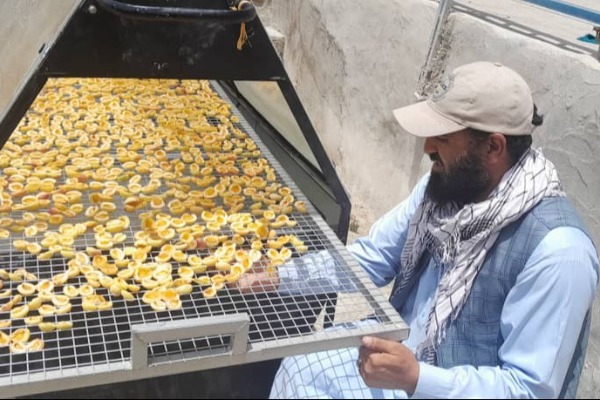
The situation began to change when the Food and Agriculture Organization (FAO) initiated a project aimed at empowering women in agriculture through the distribution of solar dryers. Nazwaro was thrilled to learn about this program and felt hopeful about the potential improvements it could bring to her livelihood. After a survey conducted by STARS employees, she was deemed eligible to receive a solar dryer, and her excitement grew.
Two months later, Nazwaro received the solar dryer along with comprehensive training on its operation, usage, and maintenance. This training was crucial, as it equipped her with the knowledge necessary to maximize the benefits of this new technology.
Once she began using the solar dryer, the transformation was remarkable. The quality of her dried fruits and vegetables improved significantly. Whereas her traditional methods produced low-quality products that sold for only 150 AFN per kilogram of dried apricots, the solar dryer allowed her to enhance the color and flavor of her produce, enabling her to sell the same quantity for up to 300 AFN. This price increase doubled her income from this product alone, providing her family with much-needed financial relief.
Moreover, the solar dryer increased her productivity. In the past, Nazwaro could dry only 15-20 kg of fruits per season due to the limitations of traditional methods. Now, she can dry up to 40 kg per season, effectively tripling her output. This boost in productivity not only contributes to her family's income but also allows her to supply better-quality products to the local market, enhancing her reputation as a reliable seller.
Nazwaro’s story has resonated within her community, serving as an inspiring example for other women involved in similar agricultural practices. The solar dryer has not only improved her economic situation but has also empowered her personally. She feels proud of her ability to provide for her family and contribute positively to her community.
The FAO's initiative has brought about significant positive changes in Nazwaro's life and the lives of other women in her village. Many women have expressed their gratitude for the support, recognizing the solar dryer as a transformative tool that enhances their livelihoods and promotes gender equality in agricultural practices.
Nazwaro’s success story exemplifies the profound impact that targeted support and innovative technology can have on the lives of women in rural Afghanistan, paving the way for a brighter, more sustainable future for their families.